The Defining Factors for Milsatcoms
Satellite technology has always been a lynchpin of the government and defence communications portfolio, but its role today is evolving and becoming even more integral as the way in which nations approach conflicts undergoes its own transformation. As satellite technology emerges from its silo into mainstream telecommunications, the conversation around how it will adapt to serve the defence sector is well underway.
This has been underscored at recent industry events. ST Engineering iDirect’s Defence Technology Day has become a mainstay in the satellite industry calendar. Bringing together the company’s technology partners and users, it focuses on current industry themes, trends and technologies. Entitled ‘Empowering Sovereign Defence’, it drew out key themes that the European defence sector is focused on, not least the questions of how national security will be shaped by evolving threats, current conflicts, the geopolitical environment and the new demands that are being placed upon defence forces across Europe and beyond.
Eurosatory is another important benchmark for defence and security and unites key players from the international ecosystem. It’s become an integral event that helps shape the response to the challenges of the future and combines technological innovation with strategic thinking and international cooperation.
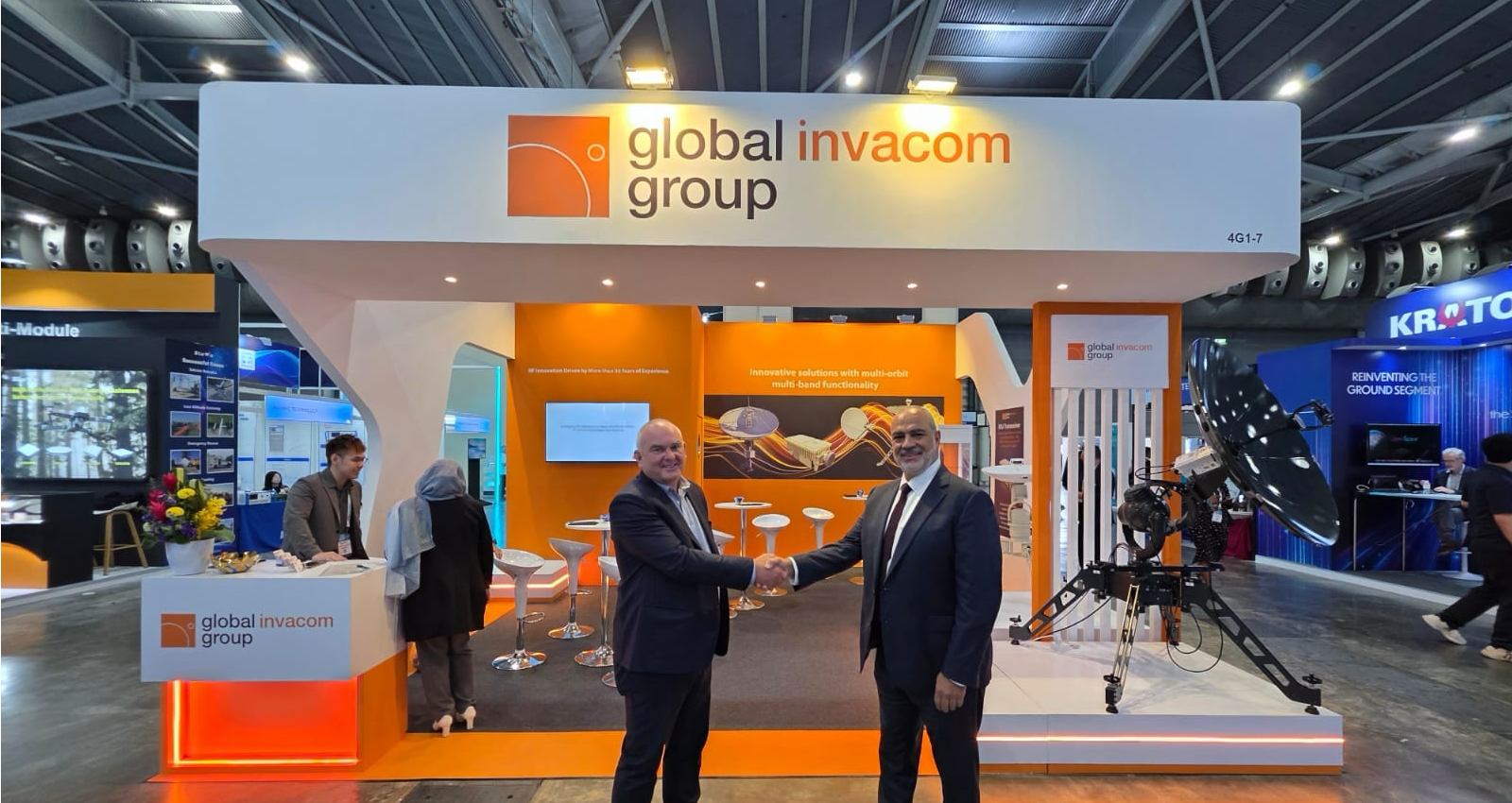
Our Sales Director Government and Defence, Amair Khan, spent time at both events last month and here is his take on 5 key points that he thinks are going to be very central to the way the satellite business for defence will evolve in the near to medium future.
1. The threats we face are ever changing
The threats facing national defence forces have changed dramatically and have evolved to include the proliferation of drone technology used to perform a range of operations including ISR and attacks. The evolution of the ‘Grey Zone’ has also seen hybrid threats where hostile actors are working to disrupt critical infrastructure, to spread disinformation, carry out cyber- attacks and use espionage to infiltrate defence operations. Space based assets are vulnerable to attack through jamming and spoofing, disrupting communications and navigation services. The entire threat landscape is also constantly becoming more advanced, more sophisticated and so staying one step ahead is more important than ever.
2. Who takes ownership? Balancing control, interoperability and resilience
As Europe looks to unite to become more independent and develop its own capabilities, with a move away from a reliance upon the US, the question of how sovereignty will work in the context of shared capabilities arose. Do shared programmes and collaborative developments offer shared sovereignty, rather than belonging to any particular nation? There are many aspects that must be carefully established such as how ownership of systems would work, who makes the decisions and if this should be collective or nominated to certain nations. This is a complex but important question to be worked out.
3. European Waveforms
There has been a great deal of progress made towards the development of a European Protected Waveform. This is an initiative that has been spearheaded by ST Engineering iDirect and, at the end of last year, over-the-air testing was completed, marking a critical milestone for the consortium and the waveform’s ability to safeguard military satcoms against jamming, cyber threats and unauthorized access across GEO and LEO. As Europe faces increasing threats, robustness and resilience of communications infrastructure have become more important than ever. The EPW enables European forces to maintain secure communications whether they are acting independently or as part of a coalition.
4. Agile terminals
The need for resilience and adaptability as well as seamless integration across networks and constellations has become critical prerequisites for terminals used in the field. Terminals today must be highly adaptable, able to work across multiple bands, in multiple frequencies for many different applications. This means that flexibility must be built-in and able to handle the complex networks that they must operate across. For defence users, the terminals must be easy to use because the operatives in the field may not be trained, it must simply work. Our XY terminal is a great illustration of a quick deploy terminal that can be packed up, transported and deployed rapidly and operated confidently by a nonspecialist user in mission critical scenarios.
With important considerations in terms of size, weight, power and cost essential considerations, terminal manufacturers are meeting the demands of defence forces, developing lower cost products with shorter lead times. From the perspective of delivering products to defence users more rapidly, our XRJ RF subsystem can be integrated into these terminals as an alternative to manufacturers developing their own. This would allow shorter development cycles of new technology products on to the market. Quick deploy satcom systems to establish communications are vital and our XY terminal presents the ideal solution for armed forces connectivity.
At Eurosatory, it was clear that multi-band terminals are becoming increasingly important, giving defence forces more variety available on one terminal. Convenience is key, especially in the field of conflict. The requirement for multi-band terminals that enable users to switch between orbits and frequency bands seamlessly makes for simplified connectivity in high stress situations. Whilst in the midst of operations in the field, users would ordinarily have to swap out equipment to move from one band to the next, but next generation antennas can perform the switch between orbits and frequency bands and from one network to another. This simplifies the entire process, freeing up operatives to focus on other tasks.
Flat panel arrays are also seeing increased deployment in the field. Their low profile and conformal shape enable them to be attached to vehicles allowing connectivity on-the-move, again with seamless switching capabilities that make for continuous connectivity.
5. Deployment of 5G NTN for defence
Satellite connectivity is to play a fundamental role in next gen 5G NTN networks for defence.
Overall, defence communications are moving from isolated, siloed satellite networks to integrated terrestrial and non-terrestrial network designs. This enables a complete and seamless network that offers coverage everywhere, with no gaps, utilizing the most suitable technology where they make sense for the application. For the satellite industry, this transition is underway but is complex and involves the sector embracing telco standards and helping to shape the standards of the future. This is behind the move to virtualise and move towards cloud-based setups. This approach will literally transform defence networks making them agile and resilient with a focus on security.
The future is hybrid
We are looking at a hybrid future that will combine both telco and satellite infrastructure to eventually enable the nirvana of secure, resilient, seamless connectivity that delivers whenever and wherever it is needed. This will require a multilayered and integrated architecture for European defence that will create resilience and will counter the emerging threats that we face in this new era of conflict. This will bring together every band and every orbit to help create the connectivity network of the future that we can rely upon in the most challenging of times.
We have ground system solutions for the defence sector that enable resilient, yet flexible and scalable connectivity. Get in touch to find out more.