
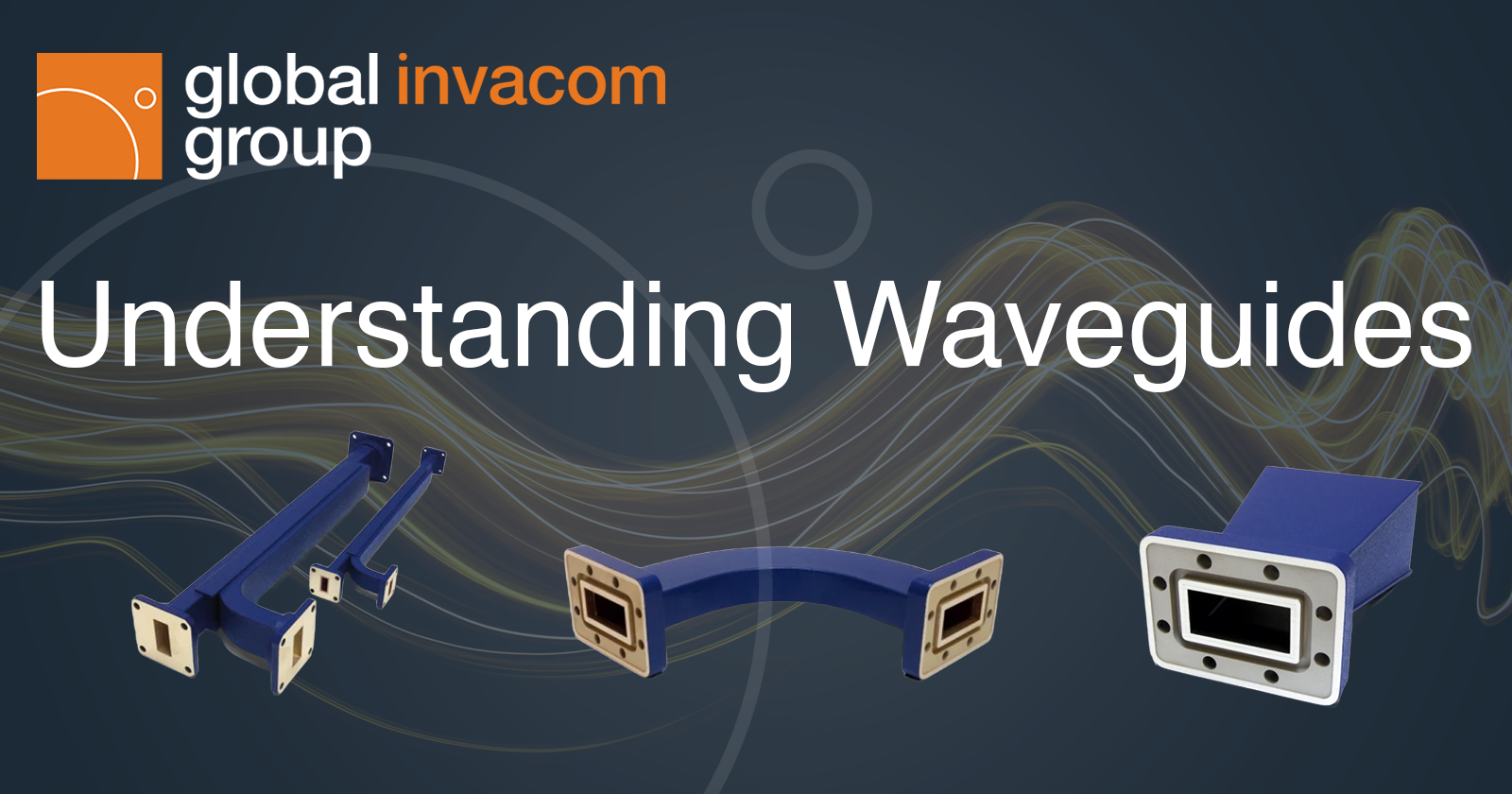
Understanding Waveguides
They are often overlooked, yet a pivotal component across multiple industries and technologies. Waveguides are the arteries of systems that use electromagnetic waves. Imagine that you are at one end of a hallway and you shout. The hallway walls ensure that your voice travels in the same direction and reaches the end of the hallway. Essentially, this is what a waveguide does.
Waveguides are specialised structures that direct electromagnetic waves from one point to another. They ensure minimal signal loss at high frequencies, making them ideal for the transmission end of satellite uplinks and downlinks, as well as being widely used for radar applications.
Multiple Applications
Found in the telecommunications, datacentres, aerospace and defence, medical and healthcare, industrial and manufacturing, electronics and IT and scientific research industries, they promote efficiency of the systems they serve.
A waveguide is hollow and uses the conductive inner structure to guide the waves and transmit power where it is needed. They are available in a wide variety of shapes and sizes, and are made of different materials, but they may also be custom designed and manufactured for certain applications resulting in a flexible component suitable across a wide range of use cases.
The waveguide in a satcom system is located between the high-power amplifier and the antenna feed. In earth stations and ground stations, the waveguide connects the indoor power amplifiers with the outdoor antenna or sits behind the antenna to carry signals to and from the receiver and transmitter. In antenna feed systems, it connects the dish feed to low noise receiver or the amplifier.
Why not use a cable?
At high frequencies, where waveguides are often used, cables can suffer from energy leaks, increase in resistance and weakening of signals. However, a waveguide allows the electromagnetic signals to propagate much more efficiently and with lower power losses.
The waveguide topology itself can influence signal propagation, which is the behaviour of electromagnetic waves as they travel from a transmitter to a receiver. The environment within a waveguide has a direct effect on the signal and how it moves from one point to another and this influences the potential loss of the signal as it travels to its destination.
Depending on the application, there are different waveguides but the main types that are widely used are:
Rectangular: Rectangular waveguides are widely used in satcom systems as they work well when connecting electronic elements and can enhance performance within certain frequency ranges.
Circular: Circular waveguides hold considerable advantages as they are able to support different propagation modes simultaneously. They are useful in more complex and sophisticated systems, offering much reduced signal loss in comparison with rectangular waveguides in certain circumstances.
Dielectric: Dielectric waveguides are manufactured using non-conducting materials such as ceramics and polymers to transmit waves. They work well at high frequencies such as Ku, Ka and Q/V bands and are used at optical, infrared and millimetre-wave frequencies.
There are other types of waveguides available in different shapes and with varying properties such as elliptical, useful for moveable antennas; ridged to increase bandwidth and flexible which are designed to be twistable and bendable. Different coatings are utilised on waveguides to enable them to deliver different properties such as to reduce damage by external environmental factors, prevent interference or to minimize signal loss.
Heritage and Group Capabilities
At Global Invacom, our Waveguides business has been working with, and producing waveguides for over 80 years. Our waveguides are trusted and used by many of the world’s leading companies in defence, aerospace, medical, naval, and satellite communications. The wider Global Invacom Group specialises in satellite ground segment capabilities for the commercial and defence sectors. As a leading innovator in RF, optical and antenna products our satcom and radio products power the largest satcom networks in the world. Read more about our waveguide heritage here and read more about our satcom capabilities here.
If you are looking for a partner that can produce waveguides that are tailored for your specific use case, please get in touch with our expert team and ask about our high precision products.